

PLAY VALUE
PLAY VALUE
The Kinder Value of Play Manifesto
Spontaneous, joyful play is essential to children’s development. It allows for discovery and exploration and forms a bedrock of their bond with loved ones. But this type of play is being squeezed out.
Academic, societal and work pressures are breaking the habit of connection through play, which should be a daily joy for parents and children alike.
Kinder aims to promote and enable joyful connections through play, supporting parents to build healthy play habits within the family and offering joyful, surprising, playful experiences to children to enhance the connection with the people around them, while contributing to create a society that values time spent in play as a way to prepare for school, work and life.
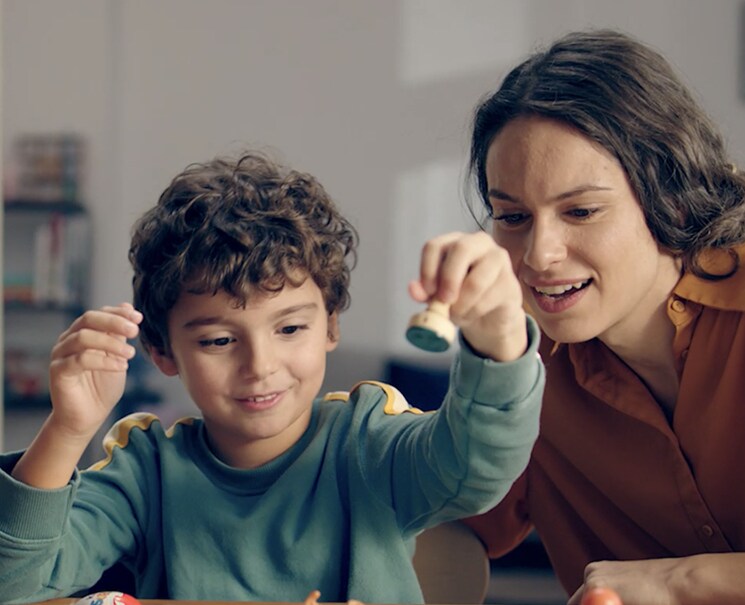
Kinder aims to promote and enable joyful connections through play, supporting parents to build healthy play habits within the family and offering joyful, surprising, playful experiences to children to enhance the connection with the people around them, while contributing to create a society that values time spent in play as a way to prepare for school, work and life.
Working with the experts
Play is not just a moment of fun, but a vital part of children's growth that supports their emotional, cognitive and social development. That’s why we collaborate with child development experts to research how play supports active learning and development, using this knowledge to guide our toy and digital content design.
+
Play Builds Emotional Strength & Wellbeing
Play Builds Emotional Strength & Wellbeing
-Play helps children understand their feelings, manage stress, and develop confidence and resilience. Through playful experiences, children learn how to calm themselves, cope with challenges, and feel emotionally secure especially during stressful times.
+
Playing Together Matters More Than the Toys

Playing Together Matters More Than the Toys
-Playing with parents, siblings, grandparents, peers, and friends supports children learning, emotional growth, and social skills far more than toys alone.
+
Shared play helps children learn

Shared play helps children learn
-When adults actively join children’s play, listening, responding, and building on their ideas, children’s thinking skills and learning grow. These shared moments help children explore ideas, solve problems, and deepen understanding.
+
Parent’s Playfulness Is Contagious

Parent’s Playfulness Is Contagious
-When parents bring imagination, humor, and curiosity into play, children become more playful too, boosting learning and making it feel joyful and engaging.
+
shared play stenghtens family connection

shared play stenghtens family connection
-Shared play experiences create moments of closeness and trust. Playing together helps parents and children feel more connected, strengthening affection and supporting healthy family relationships.
+
Free, Child-Led Play Builds Independence

Free, Child-Led Play Builds Independence
-Play that is free, without rules or structures and that is led by the child, gives children space to make choices, explore freely, and regulate their emotions and behavior. These experiences support independence, self-control, and emotional development.
+
Pretend Play Supports Language, and Social Skills

Pretend Play Supports Language, and Social Skills
-When children engage in pretend and imaginative play, they step into other people’s shoes—learning to understand feelings, express themselves, and communicate and interact positively with others.
Acknowledgement — The research underpinning this poster is informed by findings from the Power of Play (PoP) study: Ang, L., O’Neill, S., Rogers, S., Ko, S. Y. (J)., & Fox, K. (2025). The Power of Play (PoP) Study: Understanding the Role and Value of Play in Supporting Early Learning and Development. Final Report. London: UCL Institute of Education

Meet Dr. Elizabeth Kilbey
Elizabeth is a Clinical Psychologist with 15 years of experience in UK working in the NHS and privately. She works with children & adolescents in offering therapy. A well-known author and commentator on neurodivergence, Dr Kilbey has featured on Channel 4ˇs ˝The Secret Lives of 4- & 5-Year Olds˛ and she is the author of the book Unplugged Parenting: How to Raise Happy, Healthy Children in the Digital Age.
09
How does play help my child’s Growth?
Play has been identified to be vital in helping children to learn how to interact with the world around them. Play provides young children with a framework that enables them to learn motor, cognitive, physical and social skills – it is a key part of their development. Children’s brains need to be immersed in real life, hands-on and meaningful learning experiences.
Play between children and their parents is particularly useful for a number of reasons, including supporting parent-child bonding, fostering communication and connectedness, and promoting learning and emotional development.
Play is deemed so critical to child development and their physical and mental health, that it is included in Article 31of the United Nations Convention on the Rights of the Child.
10
What are your top tips on how to make play time with children as engaging as possible?
One of the ways that parents can make play time as engaging as possible is through interactive and child led play. This is where parents follow the lead set by the child, while commenting or narrating what they are doing. For example, when your child is playing with buildable animal toys, you can describe what the characters are doing, such as “the big Lion is running over to the baby Lion”. Be curious about what might happen next and allow your child to set the story line, with you joining in with the scenario and following what the main character is doing.
When your children are playing digitally, try and engage in games that you can do together, particularly games that are interactive and allow you to talk about what you are doing and share in the themes of game. For example, on the new app developed by Kinder, your children can take part in their own adventure which you both can then revisit at Storytime to bond over the playing experience they have just had.
11
How can I make play time family fun for everyone when the kids are different ages?
It is important to include games that all members of the family can engage with and this may mean choosing activities that cater to the skills of younger members. Games of chance and ones that don’t rely on specific skills can be good because it gives everyone an equal chance.
Also, shorter games that are more manageable for younger children will likely be more successful. The app developed by Kinder is a great example of activities which adapt to the age of children so they are being challenged appropriately.
12
How can play help little ones process their feelings and emotions?
Play can be an important outlet for children to express their feelings and emotions. It can provide a way for children to play out scenarios to help them make sense of them and to understand what has happened and what might happen. Children can also externalise their feelings by playing them out through the play characters and this can help them to make sense of them.
Play, particularly make-believe or imaginary play, enables children to work on regulation in a safe environment, promoting the development of both cognitive and social abilities. The key mechanism of play is that it enables children to practice, and take on, “for real” scenarios in an imaginary way.
This allows children to explore complex themes within the safe confines of play and in a way that lets them step out of these ‘play’ scenarios as needed.
13
What are your thoughts on children playing on smartphones/tablets as part of their development?
The current generation of children are growing up as digital natives. Play is no longer experienced as a strictly real, or virtual, activity. Research points to an ‘increasing blurring of the boundaries between the digital and the non-digital.’ Studies focused on children’s digital play at home have shown positive learning outcomes for children.
It is important for children to engage in activities that support the full range of their physical, language, cognitive and social development. Digital play is one way of developing these skills, but it is important that children are engaging in a wide and varied range of activities to ensure that they are promoting their development in a holistic way.
14
What age would you recommend letting children play on a phone or tablet?
In the UK, government guidance does not specify any specific ages or time limits and highlights that the evidence base to support recommendations on ages and amounts is weak.
For preschool aged children, my professional view would be for parents to ensure that their young children engage in a range of different activities which can include digital play, but that they always remain a key part of their digital play experience.
15
How much time should I allow my child to play games on the phone or tablet?
There are no firm guidelines in the UK for how long children should spend on digital devices. The current guidance in the UK recommends that parents focus on the impact of digital play and screen time on aspects of family life. It is important that parents are able to manage and regulate how long children spend on digital play and that time spent playing online is done predominantly with parents and children together.
The new app developed by Kinder allows parents to follow their children’s progress on the parental dashboard. They can see the stories that they have developed together and see what skills have been learnt through the digital play.
16
Which child-friendly apps can help my kid’s development in a fun way?
Apps that encourage parents and children to play and communicate together will be most beneficial in supporting children’s development. Games that allow children to share ideas and play creatively with parents provide the optimum environment for children.
Applaydu, the new app launched by Kinder, provides a playing experience created for the whole family that aims to encourage bonding time where parents and their children can play and discover together. It aims to help develop cognitive skills including mathematics, motor skills, reading & writing and memory in children. The app was recently awarded the highest rating (5*) by the Educational App Store.
17
What are the benefits of digital play on child development?
Studies focused on children’s digital play at home have shown positive learning outcomes. Digital play can help children’s cognitive development, promote creativity, help communication and social interaction skills if they are playing with others.
Recent research in the field of digital play has made suggestions that digital technology allows for increased learning and creativity; technology can incorporate immediate feedback and the allowance to correct mistakes and try out new ideas which can have a positive effect on the learning outcomes of children.
18
What activities count as digital play?
The term digital play often refers to a model of play that derives from screen-based activities.
This includes play activities related to video and computer games, electronic toys, mobile technologies, smart phones, iPads and tablets.
19
How can you make sure children are learning whilst playing games on a smartphone or tablet?
For young children, it is important that they are able to play digital games in interaction with others to optimise their learning opportunities. The role of digital play in the 21st century is continually changing, and parents should try to understand the app developers’ intended learning outcomes of the games being played by their children.
For example, Oxford University's Department of Education provided Kinder with a set of guidelines to help with the development of the new app. The app is aimed at helping children's progression by creating and developing a game that utilises and develops cognitive skills including mathematics, reading & writing, motor skills and memory.
20
Can play help my child handle disagreements with other kids?
It’s very normal for children to have ups and downs in their friendships, so it’s important not to worry too much about this. Learning to manage disagreements with others is a vital life skill and it makes sense that this is something they will need to practice.
To make this learning easier, I encourage parents to talk with their children about understanding other people’s point of view. This can be so hard at first, but it’s such a good skill to practice and will really help them when they find themselves in a disagreement with others.
21
How can play help my child make new friends?
Some children can be more tentative when it comes to meeting new people and sparking up friendships with others, and that’s ok. Not everyone will be the same and that’s what makes the world interesting.
If your child would like to make more social connections, building their communication and play skills will really help. Practicing playing imaginative games with toys or characters is a great way to start and gives them some ideas of things they could play with new friends.


23
can play help my child feel more confident in new places?
New places can feel overwhelming or unfamiliar for all of us and can make us feel worried or want to avoid them altogether. One of the reasons for this is because we don’t know what to expect or what might happen there. This is particularly true for children because they might be less able to guess or predict what will happen in places they haven’t been before.
You can make this easier and less daunting by helping your child think through what could happen in a new place and your adult powers of predicting (or guessing) are likely to be much better than theirs.
24
How can I use play to support my child when they feel worried or scared?
Childhood fears or phobias are very common for children. They can have worries about all kinds of things, spiders, the dark, going to sleep on their own. Often these worries are a normal part of children’s development, and they will move through these phases. But if worries are having a negative impact on day-to-day life, it would be good to think about accessing some support by talking with your GP.
You can also help you child by supporting them to talk through their worries and finding a way to face them together. One way of doing this could be through playing scenarios with characters who tackle their fears and overcome them.
25
can play make daily routines (like bedtime or leaving the house) more enjoyable?
It’s very common for children to want to follow their own agenda and to be less keen on following the rules of adults. They need to have a sense of control and autonomy in their world and It’s important to find ways of giving them controls in ways that are right for their age. Children thrive on challenge and can grow from being given responsibility.
Giving them these opportunities can help them feel more in control in their life and you may find that they are then happier to cooperate with the request that you need to make of them.

Play doesn’t need a special schedule or fancy equipment to be meaningful. It lives in the small, shared moments of your everyday life.
Here are some play ideas to help you turn busy routines into opportunities for connection, learning, and emotional growth.
Filter by Game Category
Filter by Time Available
+
Family Play Time
Family Dance Party

Family Dance Party
-Pick a song and dance together. Silly moves encouraged.
Why it helps
Creates shared joy and releases tension.
Parent tip
Let your child choose the songs leading the play.
+
Family Play Time
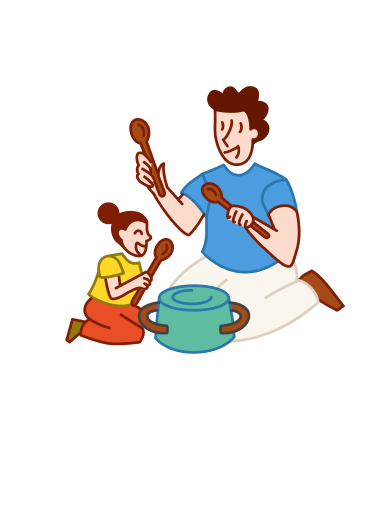
Kitchen Band
Kitchen Band
-Use pots, spoons, and cups to create a family rhythm band.
Why it helps
Encourages cooperation, rhythm, and joy.
Parent tip
Let your child lead the tempo.
+
Family Play Time
Family Gratitude Jar

Family Gratitude Jar
-Each day, write or draw one thing you’re grateful for and put it in a jar. Read them all together at the end of the week.
Why it helps
Builds positive connections and shared meaning.
Parent tip
Let your child decorate the jar.
+
Family Play Time
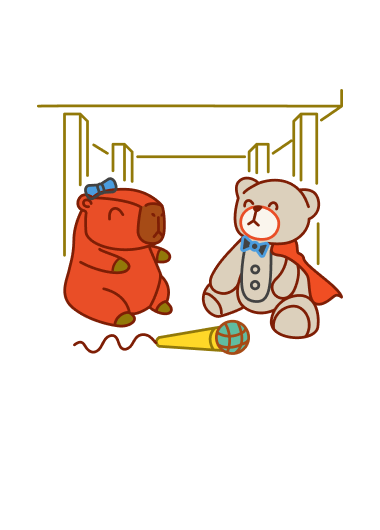
Toy Talent Show
(with Mini Home Theatre)
Toy Talent Show
-Create a theatre together, for example turning a cardboard box into a stage, or hanging a towel between two chairs. Each family member chooses a small toy (an animal, a car) & makes it perform on stage, singing, dancing, telling jokes, or doing something silly. Take turns being performer & audience.
Why it helps
Builds shared joy, creativity, communication, and confidence, encourages self-expression.
Connection tip
Follow your child’s ideas & build on them.
+
Family Play Time
Draw It Together

Draw It Together
-Sit together with one large sheet of paper & some crayons or pencils. Take turns adding something to the same drawing (one detail at a time). There’s no plan: the picture grows as you play together. You can turn it into a game by drawing without talking & guessing what the picture is becoming, or talking while drawing and telling a story.
Why it helps
Encourages cooperation, listening, self-expression and shared creativity.
Connection tip
Resist the urge to correct, follow your child’s ideas & enjoy the process.
+
Family Play Time
Shadow on the Wall

Shadow on the Wall
-Using a flashlight or a phone light in a dimmed room, take turns using your hands or small toys to create shapes on the wall (e.g., create a bird shadow and flap your arms while tweeting, or shape a snake with your hands & hiss.
Why it helps
Sparks imagination and creates a calm, intimate environment for communication.
Parent tip
Ask "What does that shape look like to you?" and build a story around it.
+
Family Play Time
Family High-Five

Family High-Five
-Work together to invent a unique "secret" family high-five or handshake involving 3–4 different moves.
Why it helps
Creates a sense of belonging and a unique "family identity".
Parent tip
Use this handshake whenever you reunite after school or work to quickly reconnect.
+
Family Play Time
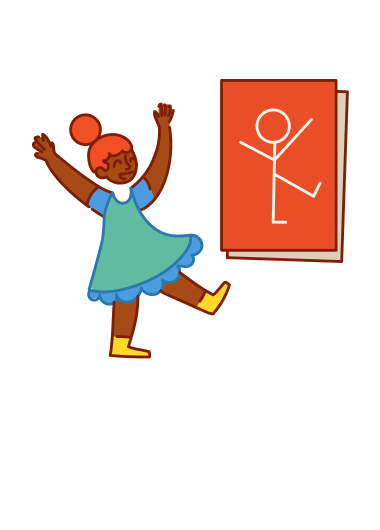
HUMAN MIRROR CHALLENGE
HUMAN MIRROR CHALLENGE
-Draw a few simple "stick figures" on small pieces of paper, each in a different pose (one leg up, arms crossed, hands on the head, etc.). The adult picks a card, the kid should quickly mirror the pose shown. Then switch roles.
Why it helps
Develops body awareness, balance & coordination as they try to match different positions. It also strengthens attention and observation skills.
Connection tip
Let your child be the "choreographer" and create their own complex stick-figure poses for you to try.
+
Emotional Play
Mirror Emotions

Mirror Emotions
-Stand face-to-face and mirror each other’s facial expressions. Take turns leading and copying.
Why it helps
Builds emotional recognition and empathy.
Parent tip
Make it playful with silly expressions too.
+
Emotional Play
How Is My Toy Feeling?
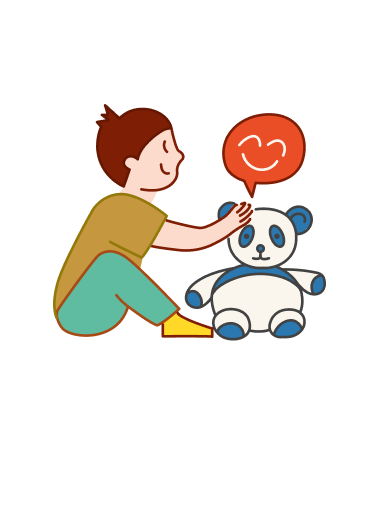
How Is My Toy Feeling?
-Place a few small toys in front of your child. Take turns choosing a toy and saying how it feels today and why.
Why it helps
Builds emotional awareness and vocabulary.
Parent tip
Model simple emotions first (happy, sad, worried).
+
Emotional Play
Emotion Charades

Emotion Charades
-Act out a feeling using only your body. The other person guesses the emotion.
Why it helps
Strengthens emotional awareness and nonverbal communication.
Parent tip
Keep it light: laughter helps make feelings safer.
+
Emotional Play
Guess my emotion

Guess my emotion
-Write emotions on 15–20 cards and place them face down. Each player clips a card to their headband without looking. Your child and you take turns asking yes-or-no questions to guess the emotion. If they guess correctly, they keep the card. The player with the most cards wins.
Why it helps
Builds emotional recognition and empathy.
Parent tip
Make it playful with fun emotions too.
+
Emotional Play
Toy Takes a Break

Toy Takes a Break
-Pretend a toy feels overwhelmed, or angry, or sad. Together, help it calm down or cheer up, breathing, stretching, resting or telling him a story.
Why it helps
Teaches self-regulation strategies.
Parent tip
Use the same calming tools you’d suggest to your child.
+
Emotional Play
TOY rescue

TOY rescue
-If a toy "breaks" (or pretends to be sick or had a very bad day), work together to "fix" it with a hug, a tissue "bandage," or singing a lullaby.
Why it helps
Practices empathy and nurturing behavior toward others.
Parent tip
Model gentle touch and soothing words that your child can later use for themselves.
+
Everyday Play Time
Wake-Up Faces

Wake-Up Faces
-Greet each other in the morning with the same silly or emotional face (e.g., You can set it up the night before: Agree together on what the first morning face will be. “Let’s do a sleepy turtle that is getting up”).
Why it helps
Builds emotional connection and sets a positive tone.
Connection tip
Let your child choose the face for the next day.
+
Everyday Play Time
Walking Stories
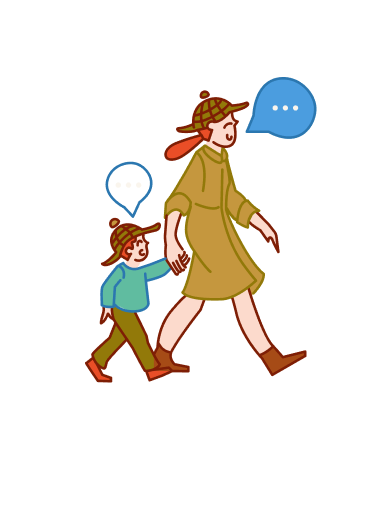
Walking Stories
-Create a story together, one sentence at a time while walking. Take turns to continue the story (e.g., “That dog we saw is actually a detective…”, “…who is looking for a missing cookie”).
Why it helps
Supports imagination and turn-taking.
Connection tip
Let the story go wherever your child leads.
+
Everyday Play Time
Backpack Surprise

Backpack Surprise
-Add a small playful note, drawing, or challenge for your child to find in their school backpack or somewhere where they find it (e.g., inside their shoes, under their pillow, under their plate at breakfast, in a jacket pocket).
Why it helps
Creates emotional connection across the day.
Connection tip
Invite your child to surprise you next time.
+
Everyday Play Time
Invisible Ball
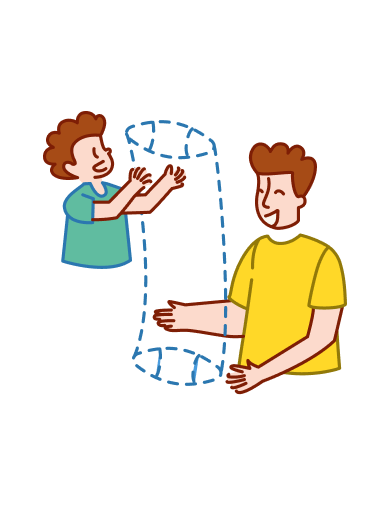
Invisible Ball
-Pretend to throw and catch an invisible ball, changing its size or weight.
Why it helps
Encourages imagination and cooperation.
Connection tip
Let your child change the rules.
+
Everyday Play Time
Who Am I?
Who Am I?
-Hide a small toy behind your back and describe it with clues. Your child guesses which toy it is.
Why it helps
Builds listening and thinking skills.
Connection tip
Take turns being the describer and guesser.
+
Everyday Play Time
Guide me there
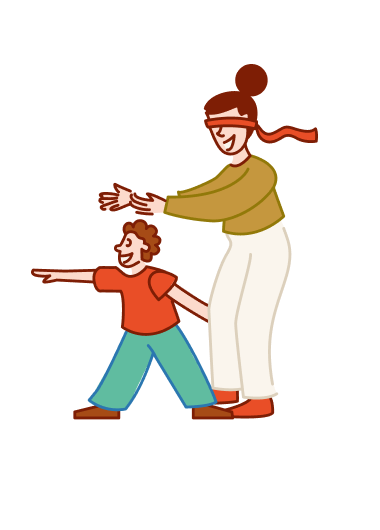
Guide me there
-On a familiar walk (to the car or the park), let your child be the "GPS." They tell you when to turn left, right, stop, or go "turbo speed."
Why it helps
Encourages confidence and decision-making by letting children take the lead, while also developing spatial awareness and navigation skills.
Connection tip
If they lead you the "wrong" way on purpose, follow them for a few steps: the shared silliness is more important than the destination.
+
Everyday Play Time
Be creative!

Be creative!
-Draw 3-5 identical circles on a large sheet of white paper. Challenge your child to transform each circle into a different object using markers or crayons (e.g., different faces, fruits such as an orange, object such as a balloon or a clock).
Why it helps
Promotes divergent thinking, teaching children that a single starting point can lead to infinite possibilities.
Parent tip
You can start the drawing for your little ones, like adding the ears of a bear or the petals of a flower, and let them finish the coloring.
+
Everyday Play Time
Be a magician
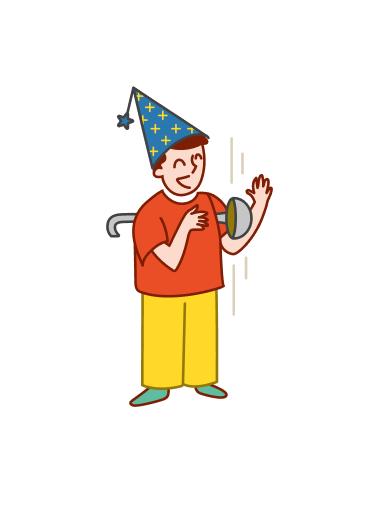
Be a magician
-Hold a steel ladle by the handle under your arm with the rounded side facing the audience. Lightly steady it with your fingertips, then slowly let go and move your hands around it to create the illusion that a metal sphere is floating in mid-air with no support.
Why it helps
Performing a trick in front of others helps children feel proud of themselves and more comfortable being seen and heard, building confidence and communication skills.
Parent tip
Keep the tone light and playful rather than performance-focused. Praise effort, not just success.

The Kinder JOM program
We participate in various global social responsibility projects to support our mission of celebrating the simple joys of childhood, also collaborating with NGOs and academic institutions.
One example is our Kinder Joy of Moving social responsibility program, which encourages kids to engage in physical activity in a joyful way. Over the past 20 years, the program has reached more than 63 million children across 30 countries. Inspired by the Joy of Moving method, the initiative is delivered through partnerships with a wide range of organizations, including public institutions, National Olympic Committees, and sports federations around the world.
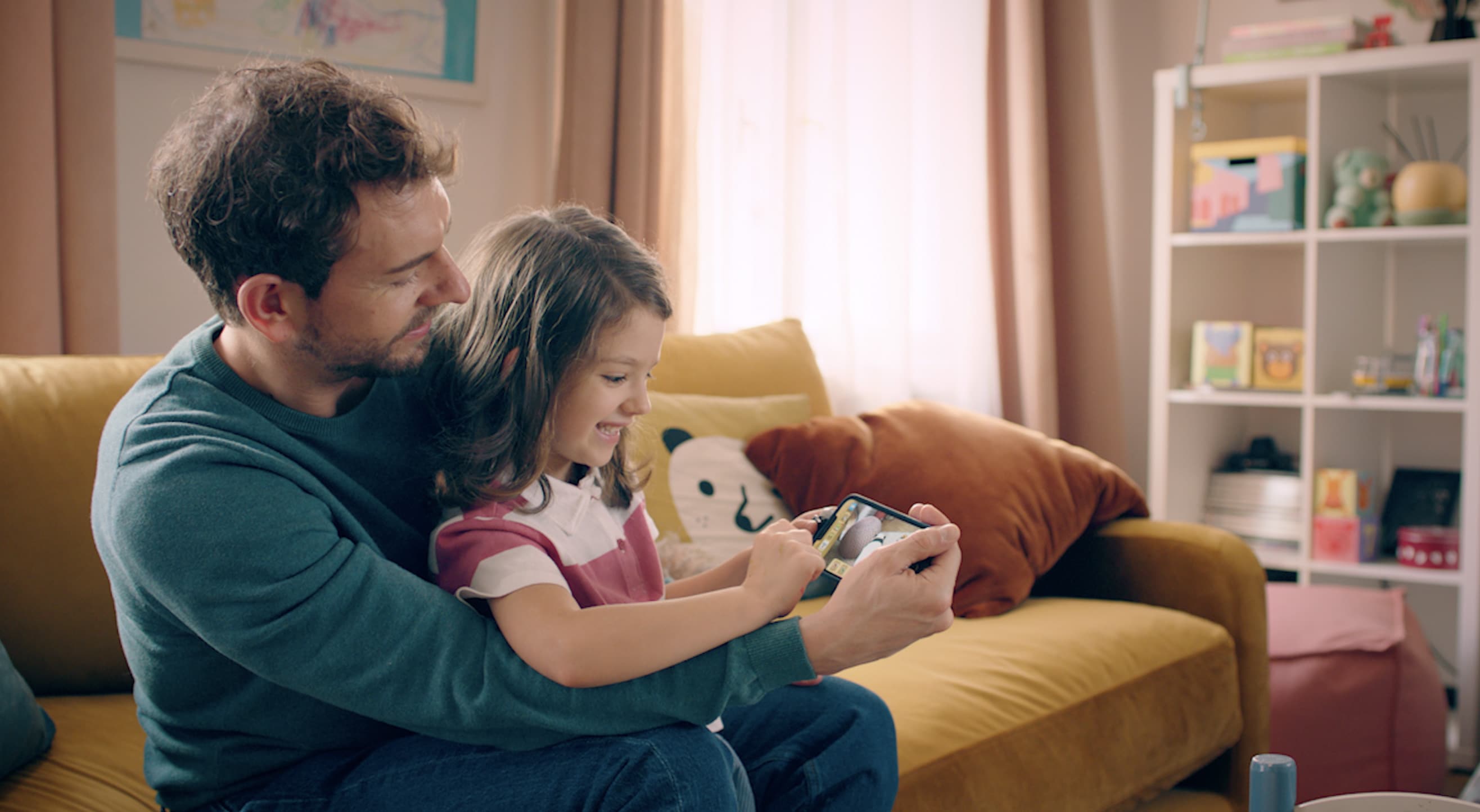
The Applaydu app
With the Applaydu app, parents and kids can bring their Kinder toys to life through augmented reality, extending storytelling and play into a fun world of discovery and imagination.
Since its launch in 2020, Kinder has been collaborating with the Department of Education at the University of Oxford through the LiFT (Learning for Families through Technology) project to study and develop how digital play experiences can support children’s learning, creativity, vocabulary development and family interactions.
Applaydu is a free app, without in-app purchases and advertisement-free. Applaydu has been independently reviewed and certified by kidSAFE to meet their standards of online safety and privacy.
Our care for quality and safety
Quality and safety are key priorities in the design of our KINDER® toys. We certify each toy through independent laboratories, world leaders in safety testing and certification, and we carry out voluntary tests over and above those required by international regulations.
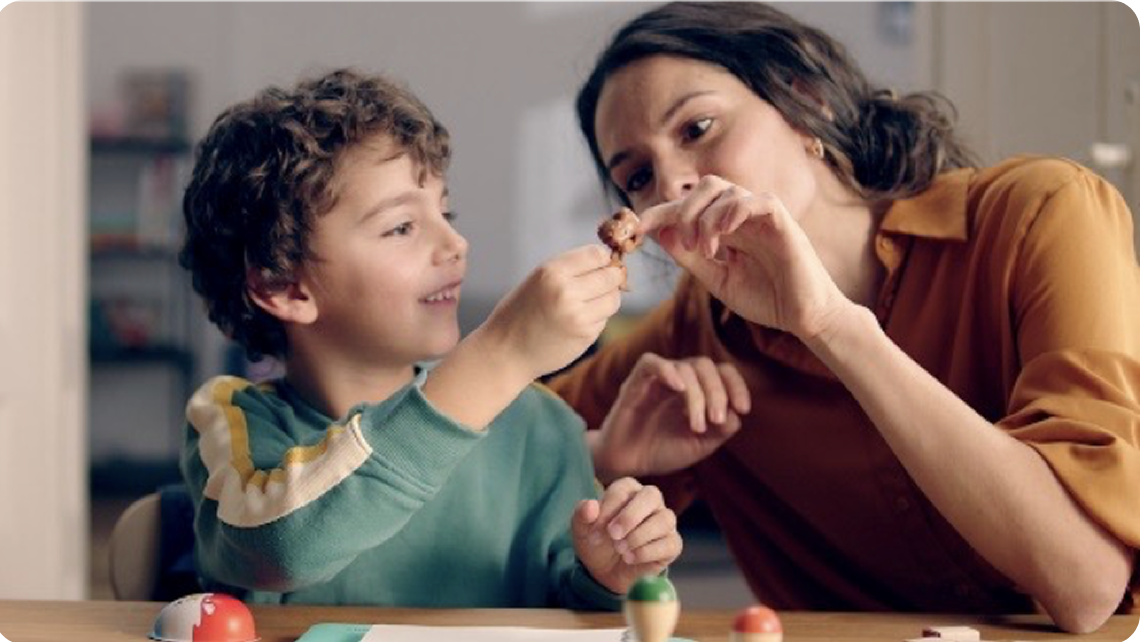
Safety and quality are key pillars in the development process of our KINDER® toys. That’s why KINDER® toys not only comply with international toy regulations and standards but are also designed to meet additional internal requirements.
Each KINDER® toy complies with:
- European directive on toy safety 2009/48/CE.
- European toy-safety standards on mechanical, flammability and chemical requirements (EN71).
- International toy-safety standard ISO 8124.
- National toy regulations and standards of all the countries where we sell KINDER® toys.
- Other regulations, such as REACH, related to chemicals registration, evaluation, authorization and restriction.
- ASTM F963 requirements (applicable for toys sold in US)
Moreover, within the Ferrero Toys Testing Protocol, we carry out voluntary tests over and above those required by international regulations and enforce strict guidelines on the design of our toys based on their dimension and shape, carefully selecting high-quality materials to avoid breakages.
Kinder toys are not suitable for children under three years old because they include small parts. We clearly communicate this information on all the label of Kinder eggs.